

If you have ever wondered why you inherited your mother’s stubborn cowlick, why your brother can eat endless amounts of pizza without gaining weight while you seem to gain a pound just looking at a carbohydrate, or how doctors can predict your susceptibility to certain conditions, you are already thinking about genetics. For many people, the world of genetics feels locked away in a high-tech laboratory, spoken about in a dense, intimidating vocabulary of nucleotides, codons, and translocations. But the reality is much closer to home. Genetics is the invisible operating manual that guides how your body functions, grows, adapts, and occasionally stumbles every single day. Understanding the basics of genetics doesn't require a PhD in molecular biology. By breaking down how your DNA works, how traits are passed down through generations, and how your lifestyle interacts with your genetic code, you can unlock a clearer, more proactive view of your personal health. Welcome to your beginner-friendly guide to the blueprint of you. The Ultimate Blueprint: What DNA Actually Does To understand genetics, we have to start at the absolute foundation: your DNA (deoxyribonucleic acid). A wonderful way to picture DNA is to think of it as a massive, multi-volume cookbook stored inside nearly every single cell in your body. Each "recipe" in this cookbook corresponds to a specific gene. Genes are essentially molecular instructions that tell your cells how to build proteins. And proteins are the true workhorses of your biology—they form your muscle tissue, carry oxygen in your …
If you have ever wondered why you inherited your mother’s stubborn cowlick, why your brother can eat endless amounts of pizza without gaining weight while you seem to gain a pound just looking at a carbohydrate, or how doctors can predict your susceptibility to certain conditions, you are already thinking about genetics.
For many people, the world of genetics feels locked away in a high-tech laboratory, spoken about in a dense, intimidating vocabulary of nucleotides, codons, and translocations. But the reality is much closer to home. Genetics is the invisible operating manual that guides how your body functions, grows, adapts, and occasionally stumbles every single day.
Understanding the basics of genetics doesn’t require a PhD in molecular biology. By breaking down how your DNA works, how traits are passed down through generations, and how your lifestyle interacts with your genetic code, you can unlock a clearer, more proactive view of your personal health. Welcome to your beginner-friendly guide to the blueprint of you.
The Ultimate Blueprint: What DNA Actually Does
To understand genetics, we have to start at the absolute foundation: your DNA (deoxyribonucleic acid). A wonderful way to picture DNA is to think of it as a massive, multi-volume cookbook stored inside nearly every single cell in your body.
Each “recipe” in this cookbook corresponds to a specific gene. Genes are essentially molecular instructions that tell your cells how to build proteins. And proteins are the true workhorses of your biology—they form your muscle tissue, carry oxygen in your blood through hemoglobin, digest your food through specialized enzymes, and coordinate your immune response.
The Four-Letter Alphabet of Life
What makes this biological cookbook so fascinating is its simplicity. The entire instruction manual is written using just four chemical building blocks, known by their abbreviations:
- A (Adenine)
- T (Thymine)
- C (Cytosine)
- G (Guanine)
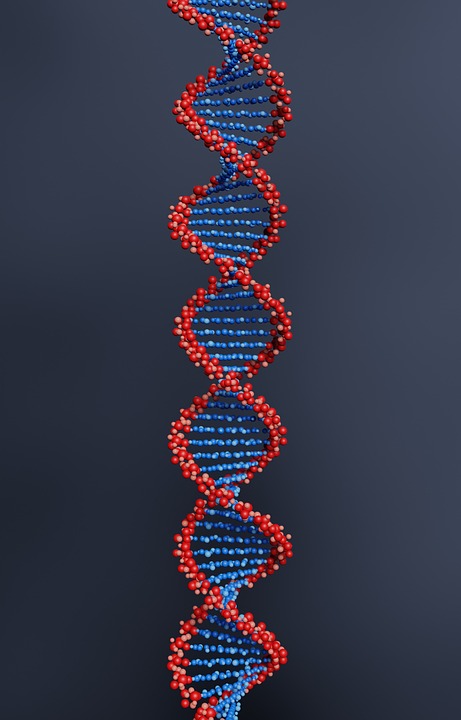
These letters pair up in specific combinations along a twisted ladder structure (the famous double helix). Just as thousands of unique words can be spelled using an alphabet of 26 letters, your body builds every complex biological structure you possess using just these four repeating chemical letters arranged in precise sequences.
From Generation to Generation: How Traits Are Passed Down
Have you ever looked in the mirror and spotted a facial feature that is unmistakably your father’s, or your maternal grandmother’s? That physical echo is the direct result of heredity—the passing of genetic information from parents to children.
Chromosomes: The Library Shelves
If genes are the recipes, and DNA is the text, chromosomes are the library shelves. Humans typically have 23 pairs of chromosomes, giving us a total of 46. You receive 23 chromosomes from your biological mother and 23 from your biological father.
This blending is why siblings from the same parents can look and act so differently. Through a biological shuffle during the creation of egg and sperm cells, you inherit a completely unique randomized combination of your parents’ genetic material.
Dominant vs. Recessive: A Misunderstood Dynamic
You may remember learning about Gregor Mendel and his pea plants in school—specifically the concepts of dominant and recessive traits. While Mendel’s work laid the groundwork for modern genetics, human traits are rarely as simple as a single dominant gene overriding a recessive one.
- Simple (Mendelian) Traits: Some conditions and traits are governed by a single gene, such as Huntington’s disease or cystic fibrosis. In these cases, inheriting a specific variant on a single gene heavily dictates the outcome.
- Complex (Polygenic) Traits: Most everyday health traits—like your height, skin color, blood pressure, and baseline risk for conditions like heart disease—are polygenic. This means they are influenced by dozens, hundreds, or even thousands of small genetic variations working in concert.
Nature vs. Nurture: The Dynamic Gene-Environment Duo
One of the most common misconceptions in health is genetic fatalism: the belief that “it’s all in my genes, so there is nothing I can do about it.”
Modern science has soundly debunked this idea through the lens of gene-environment interaction. Your genes are not a rigid prison sentence; rather, they are a set of dimmer switches that are constantly being adjusted by your external environment and lifestyle choices.
The Plant Analogy
Imagine your genetic code is a packet of heirloom tomato seeds.
- Your genetics determine the potential of those seeds: they will grow into tomato plants, they have a certain genetic resistance to specific blights, and they have a maximum potential fruit yield.
- However, whether those plants actually thrive depends entirely on your environment: How much water do they get? Are they sitting in rich soil or barren dirt? Do they receive plenty of sunlight?
If you neglect the plants, even the highest-quality seeds will wither. Conversely, providing an optimal environment brings out the best possible expression of those biological traits.
Epigenetics in Action
This field of study is known as epigenetics (meaning “above genetics”). Epigenetic tags sit on top of your DNA like chemical sticky notes. They tell your cells which genes to turn up, turn down, or switch off entirely. Factors like chronic stress, nutrition, sleep quality, physical activity, and exposure to environmental toxins can alter these tags, influencing how your genes are expressed without changing the underlying DNA sequence itself.
Navigating Genetic Risk: Understanding Probabilities
When people receive genetic test results or review their family health history, terms like “increased risk” or “predisposition” often cause unnecessary panic. It helps to understand how genetic risk actually works in clinical settings.
Risk is Not a Guarantee
Unlike deterministic conditions—where a specific genetic mutation guarantees you will develop a disease—most health-related genetic markers indicate probabilistic risk.
For example, carrying a specific genetic variant associated with elevated cholesterol or type 2 diabetes does not mean you are guaranteed to develop the condition. It simply means your baseline statistical probability is higher than average.
This is actually empowering information. Knowing that your biological baseline tilts toward a certain health challenge allows you and your healthcare provider to implement targeted preventive strategies—such as earlier screenings, specialized dietary adjustments, or proactive monitoring—long before any symptoms appear.
Practical Takeaways: How to Use Your Genetic Knowledge Today
You do not need a direct-to-consumer DNA saliva test to start applying the principles of genetics to your daily wellness routine. Here are practical ways to harness the power of your biology:
- Map Your Family Health History:
Your family tree is your most accessible genetic report card. Sit down with relatives and document patterns of chronic conditions (such as heart disease, diabetes, hypertension, or specific cancers) across at least two generations. Note the age of onset, as conditions developing earlier in life often carry a stronger hereditary component. - Prioritize Lifestyle as a Genetic Buffer:
Remember that your daily habits act on your epigenetics. Eating a nutrient-dense diet, maintaining regular cardiovascular and strength exercise, managing stress, and avoiding smoking help “turn down” the expression of pro-inflammatory or disease-promoting genetic pathways. - Partner Strategically with Your Physician:
If you have a strong family history of a specific condition, don’t keep it to yourself. Share this information during your routine physicals. Ask your doctor if your family history warrants specialized screenings or earlier diagnostic testing. - Approach Consumer Genetic Tests with Context:
If you choose to use commercial DNA testing kits, view them as entertainment or broad educational tools rather than definitive medical diagnoses. Always review unexpected or high-risk findings with a certified genetic counselor or your primary care physician.
Conclusion
Genetics is not a rigid script written in stone; it is a dynamic, responsive masterpiece of biological engineering. By understanding that your DNA provides a framework rather than a final destiny, you shift from a passive passenger to an active participant in your health journey. Armed with knowledge about how genes operate, how traits pass through families, and how powerfully your lifestyle shapes your gene expression, you can make informed, proactive choices for a healthier future.
Frequently Asked Questions
1. If both of my parents have a certain health condition, does that mean I will definitely inherit it?
Not necessarily. Unless the condition is caused by a dominant, single-gene mutation with high penetrance, having parents with a specific health issue usually only increases your risk or predisposition. Many common conditions are polygenic and heavily influenced by lifestyle factors, meaning your personal habits can significantly modify your overall risk profile.
2. Can my lifestyle choices actually change my DNA sequence?
No. Your underlying DNA sequence (the A, T, C, and G letters you were born with) remains stable throughout your life. However, your lifestyle choices can alter your epigenome—the chemical tags that determine how actively those genes are read and expressed by your cells.
3. What is the difference between a genetic test ordered by a doctor and a commercial DNA kit?
Clinical genetic tests ordered by a physician or genetic counselor are typically diagnostic or predictive tests aimed at identifying specific medical mutations with high analytical accuracy, often accompanied by professional counseling to interpret the results. Commercial, direct-to-consumer DNA kits generally provide broader ancestry breakdowns and wellness insights, but they scan only a fraction of your DNA and are designed for informational rather than diagnostic purposes.
4. Why do siblings can look and act so completely different if they have the same parents?
During the formation of reproductive cells, chromosomes undergo a process called recombination, where genetic material is shuffled and randomly assorted. Because you receive a random 50% mix from each parent, and that mix changes with every pregnancy, siblings inherit vastly different combinations of the family’s genetic traits.