





Meta Description: Discover how your genetics, DNA, and family health history influence your well-being. Learn about genetic risk factors, testing, and lifestyle choices at The Health Care. When you look in the mirror, you might notice you share your mother’s eye color or your father’s smile. But your physical appearance is only the surface of a much deeper blueprint. Inside nearly every cell of your body lies a complex, microscopic library that dictates everything from how your body processes nutrients to how your cells repair themselves. Understanding genetics and health can feel like learning a foreign language. Terms like DNA, mutations, and polygenic risk are thrown around frequently in science news, but what do they actually mean for your day-to-day wellness? In this article, we will break down the basics of human genetics, explain how your genes interact with your environment, explore the role of family health history, and look at what genetic testing can (and cannot) tell you. What is DNA? The Body’s Instruction Manual To understand genetics, we first need to look at the building blocks of life. Imagine your body as a massive, intricate house. DNA (deoxyribonucleic acid) is the master instruction manual used to build, maintain, and repair that house. DNA is shaped like a twisted ladder, known as a double helix. The rungs of this ladder are made up of four chemical bases: Adenine (A), Thymine (T), Cytosine (C), and Guanine (G). These letters spell out a biological code. Genes: Specific segments of your DNA …
Meta Description: Discover how your genetics, DNA, and family health history influence your well-being. Learn about genetic risk factors, testing, and lifestyle choices at The Health Care.
When you look in the mirror, you might notice you share your mother’s eye color or your father’s smile. But your physical appearance is only the surface of a much deeper blueprint. Inside nearly every cell of your body lies a complex, microscopic library that dictates everything from how your body processes nutrients to how your cells repair themselves.
Understanding genetics and health can feel like learning a foreign language. Terms like DNA, mutations, and polygenic risk are thrown around frequently in science news, but what do they actually mean for your day-to-day wellness?
In this article, we will break down the basics of human genetics, explain how your genes interact with your environment, explore the role of family health history, and look at what genetic testing can (and cannot) tell you.
What is DNA? The Body’s Instruction Manual
To understand genetics, we first need to look at the building blocks of life. Imagine your body as a massive, intricate house. DNA (deoxyribonucleic acid) is the master instruction manual used to build, maintain, and repair that house.
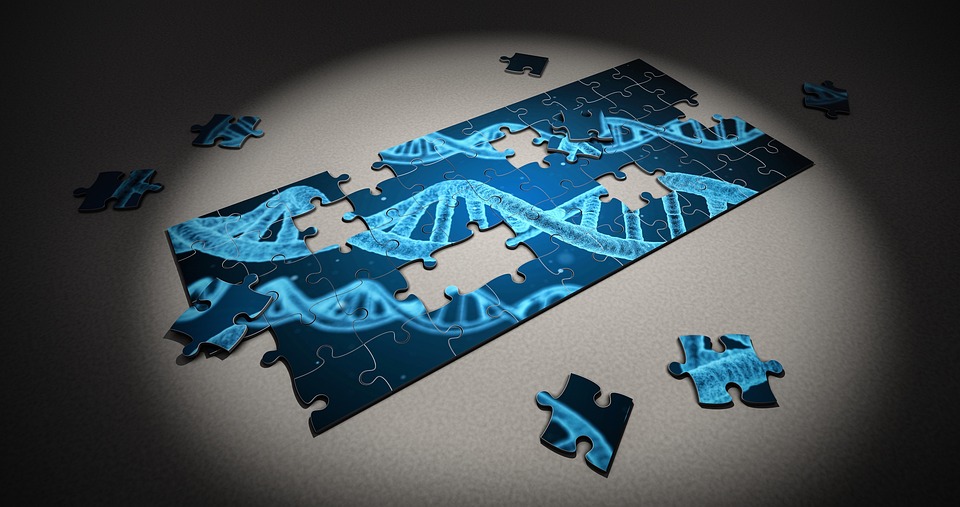
DNA is shaped like a twisted ladder, known as a double helix. The rungs of this ladder are made up of four chemical bases: Adenine (A), Thymine (T), Cytosine (C), and Guanine (G). These letters spell out a biological code.
- Genes: Specific segments of your DNA code. Think of a gene as a single sentence in the master instruction manual. Each gene contains the recipe for making a specific protein, which performs vital functions in your body.
- Chromosomes: The physical structures where your DNA is packaged. Humans typically have 23 pairs of chromosomes (46 in total), inheriting one set from each biological parent.
Inherited Traits: Why You Are Unique
Every person inherits a unique combination of genetic material from their parents. This is why siblings can look and act so differently, even when raised in the same household.
- Dominant and Recessive Traits: Some traits are straightforward. For example, the gene for freckles or a specific eye color follows predictable inheritance patterns.
- Complex Traits: Most human traits—such as height, weight, and blood pressure—are not controlled by a single gene. Instead, they are polygenic, meaning they are influenced by dozens or even hundreds of genes working together.
Genetics and Health: Understanding Genetic Risk Factors
While genetics determine traits like eye color, they also play a significant role in your susceptibility to certain health conditions. However, understanding genetic risk factors requires a shift in how we think about disease.
Probability vs. Destiny
One of the most important concepts in modern genetics is that having a genetic risk factor does not mean you will definitely develop a condition.
Unlike rare genetic disorders caused by a single variation in a single gene (such as Huntington’s disease or cystic fibrosis), most common health conditions—like heart disease, type 2 diabetes, and certain cancers—are influenced by a combination of genetics and lifestyle.
- Increased Risk: Having a specific gene variant may increase your probability or risk of developing a health condition compared to the general population.
- Reduced Risk: Conversely, other variants may confer a lower risk.
- Not a Guarantee: Even individuals with high genetic risk scores for a condition may never actually develop it, just as individuals with low genetic risk scores can still be diagnosed with the condition.
The Power of the Environment: Nature Meets Nurture
Your genes do not operate in a vacuum. Think of your DNA as the hardware of a computer, and your environment and lifestyle as the software programs running on it.
This interaction between genetics and lifestyle is a core pillar of modern medicine. Environmental factors can influence how your genes are expressed—a field of study known as epigenetics.
Factors that interact with your genetic predispositions include:
- Diet and Nutrition: How your body metabolizes fats, sugars, and vitamins.
- Physical Activity: Regular exercise can positively influence cardiovascular and metabolic health, helping to offset genetic vulnerabilities.
- Stress and Sleep: Chronic stress and poor sleep patterns impact cellular health and immune function.
- Exposures: Avoiding tobacco smoke, excessive sun exposure, and environmental toxins can significantly alter health outcomes, regardless of your genetic baseline.
In many cases, positive lifestyle modifications can act as a powerful buffer against inherited health risks.
Family Health History: Your First Genetic Screen
Long before commercial genetic tests were available, doctors relied on the most accessible genetic tool in existence: family health history.
Your biological family shares a significant portion of your DNA, as well as shared environments and cultural habits. Creating a family health tree can help identify patterns of conditions that run in your family, such as:
- Heart disease
- High blood pressure
- Diabetes
- Certain types of cancer
- Mental health conditions
How to Collect Your Family Health History
- Talk to relatives: Gather information during family gatherings or phone calls. Focus on first-degree relatives (parents, siblings, children) and second-degree relatives (grandparents, aunts, uncles).
- Note ages of onset: It is clinically useful to know when a relative developed a condition (e.g., heart disease diagnosed at age 45 versus age 85).
- Share with your doctor: Present this information during your routine check-ups. It helps your healthcare provider recommend personalized screening schedules, such as earlier mammograms or cholesterol checks.
Genetic Testing: What It Can and Cannot Tell You
With the rise of direct-to-consumer genetic kits and clinical genetic screening, more people are exploring their DNA than ever before. However, it is essential to approach genetic testing with realistic expectations.
What Genetic Tests Can Do:
- Identify carrier status for certain hereditary conditions.
- Provide insight into ancestry and geographic origins.
- Offer probability estimates for certain common health conditions based on statistical models.
- Help clinical professionals determine how your body might process certain medications (pharmacogenomics).
What Genetic Tests Cannot Do:
- They cannot provide a definitive diagnosis for complex health conditions.
- They cannot account for all lifestyle and environmental factors.
- They are not a replacement for regular medical screenings and physical exams.
Important Note: Direct-to-consumer genetic tests offer general insights, but they are not diagnostic tools. If you are considering genetic testing or have received results that concern you, consult with an appropriately qualified healthcare professional or a certified genetic counselor. They can help you interpret the data accurately within the context of your overall health and medical history.
Practical Takeaways: What You Can Do Today
While you cannot change the DNA you were born with, you have immense control over how you care for your body. Here are a few practical ways to apply your understanding of genetics to your health:
- Focus on Modifiable Factors: Remember that lifestyle choices—such as eating a balanced diet, exercising regularly, not smoking, and managing stress—remain some of the most powerful tools for promoting longevity and well-being, regardless of your DNA.
- Document Your Family Tree: Spend time mapping out your family health history and update it periodically.
- Partner with Your Healthcare Provider: Discuss your family history and any genetic test results with your primary care physician to create a proactive, personalized wellness and screening plan.
- Stay Informed: Approach health headlines about “newly discovered genes” with balanced curiosity. Remember that scientific research takes time to transition from laboratory discoveries to actionable medical advice.
Conclusion
Genetics is a fascinating field that bridges the gap between who we are at a microscopic level and how we move through the world. While DNA provides the foundational instructions for our bodies, it is not a rigid script that dictates our destiny. By understanding the interplay between your genes, your family health history, and your daily lifestyle choices, you can take informed, proactive steps toward a healthier future.
Frequently Asked Questions (FAQs)
1. Can a genetic test tell me if I will definitely get a disease?
For the vast majority of common health conditions (like heart disease or diabetes), genetic tests cannot provide a definitive “yes” or “no.” Instead, they calculate statistical risk probabilities. Only a small percentage of rare, single-gene disorders offer near-certainty, and these are typically diagnosed through specialized clinical evaluations rather than general consumer tests.
2. If my parents have a certain health condition, will I automatically get it too?
Not necessarily. Inheriting a genetic predisposition increases your relative risk, but it does not guarantee you will develop the condition. Environmental factors, lifestyle habits, and sheer chance also play significant roles in determining your overall health outcomes.
3. What is the difference between a gene and DNA?
Think of DNA as the entire library of genetic information in your body. A gene is a single book or chapter within that library that contains the instructions for making a specific protein or determining a specific trait.
4. Can lifestyle changes really overcome bad genetics?
While you cannot rewrite your DNA, adopting a healthy lifestyle—such as eating nutritious foods, exercising, avoiding tobacco, and getting regular medical screenings—can significantly reduce your overall disease risk, even if you carry genetic risk factors.
5. How far back should I go when building a family health history?
It is generally most helpful to focus on first-degree relatives (parents, siblings, children) and second-degree relatives (grandparents, aunts, uncles, nieces, nephews). Note chronic illnesses, ages of onset, and causes of death if known.
6. Should I get a commercial genetic test?
Commercial genetic tests can be interesting for exploring ancestry or learning broad wellness traits. However, if you are looking for actionable medical insights regarding disease risk, it is best to speak with your doctor or a genetic counselor to determine which clinical tests (if any) are appropriate for you.