

Have you ever wondered why you might burn easily in the sun while your sibling turns golden brown, or why your best friend can drink three cups of coffee before bed and still fall asleep while a single sip of tea leaves you staring at the ceiling? The answers to these everyday puzzles lie deep within your cells, written in a microscopic language that defines who you are. Welcome to the fascinating world of genetics. While terms like "double helix," "mutations," and "genomics" often sound like they belong in a sci-fi movie or a university lecture hall, genetics is actually the very blueprint of your daily life. Understanding the basics of how your genes work—and how they interact with the world around you—is one of the most empowering things you can do for your long-term health and wellness. Let’s pull back the microscopic curtain and explore how your genetic code shapes your health, your habits, and your future. What Is DNA, Really? (The Ultimate Instruction Manual) To understand genetics, we first need to look at the master document: DNA (deoxyribonucleic acid). Imagine your body is a massive, highly sophisticated city. Every single task that happens in this city—from repairing a scraped knee to digesting your lunch—requires precise instructions. DNA is the master instruction manual for building, running, and maintaining that city. Inside almost every cell in your body (specifically in the nucleus), your DNA is tightly packed into 23 pairs of structures called chromosomes. You inherit one set of 23 …
Have you ever wondered why you might burn easily in the sun while your sibling turns golden brown, or why your best friend can drink three cups of coffee before bed and still fall asleep while a single sip of tea leaves you staring at the ceiling?
The answers to these everyday puzzles lie deep within your cells, written in a microscopic language that defines who you are. Welcome to the fascinating world of genetics. While terms like “double helix,” “mutations,” and “genomics” often sound like they belong in a sci-fi movie or a university lecture hall, genetics is actually the very blueprint of your daily life.
Understanding the basics of how your genes work—and how they interact with the world around you—is one of the most empowering things you can do for your long-term health and wellness. Let’s pull back the microscopic curtain and explore how your genetic code shapes your health, your habits, and your future.
What Is DNA, Really? (The Ultimate Instruction Manual)
To understand genetics, we first need to look at the master document: DNA (deoxyribonucleic acid).
Imagine your body is a massive, highly sophisticated city. Every single task that happens in this city—from repairing a scraped knee to digesting your lunch—requires precise instructions. DNA is the master instruction manual for building, running, and maintaining that city.
Inside almost every cell in your body (specifically in the nucleus), your DNA is tightly packed into 23 pairs of structures called chromosomes. You inherit one set of 23 chromosomes from your biological mother and the other set of 23 from your biological father.
The Four-Letter Alphabet of Life
What makes DNA so remarkable is its simplicity of design. The entire instruction manual is written using just four chemical building blocks (bases), commonly referred to by their letters:
- A (Adenine)
- T (Thymine)
- C (Cytosine)
- G (Guanine)
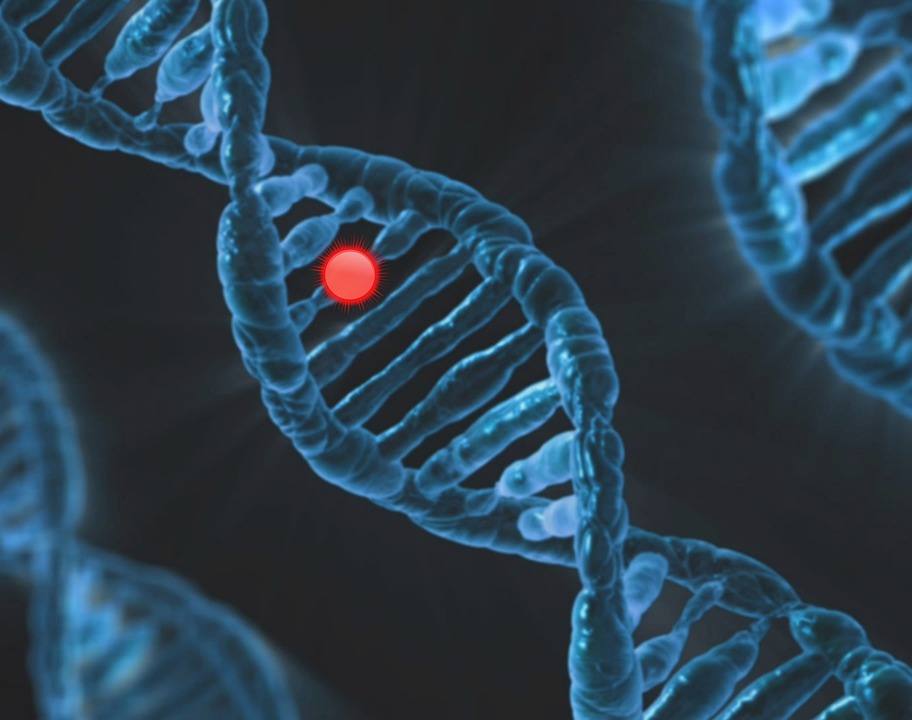
These four letters pair up in specific ways (A with T, and C with G) to form millions of combinations along a twisted ladder shape known as the double helix. The specific sequence of these letters spells out sentences and paragraphs of instructions, which we call genes.
Genes vs. Genomes: Breaking Down the Terminology
People often use genetic terms interchangeably, but they actually refer to different layers of biological scale. Let’s clear up the confusion:
- DNA: The raw chemical material (the alphabet and words).
- Genes: Specific segments of DNA that contain instructions for making functional molecules, usually proteins (the sentences and chapters). You have roughly 20,000 to 25,000 genes.
- Genome: The complete set of all your genetic material—every single letter of DNA across all your chromosomes (the entire library).
- Alleles: Different versions or variants of a particular gene. For example, you might have the gene for eye color, but the specific allele you inherited dictates whether those eyes are blue, brown, or green.
How Genes Make Proteins (The Workhorses of the Body)
Genes don’t do much on their own; they act as blueprints. When your body needs to carry out a function, it reads a specific gene and uses that information to manufacture proteins.
Proteins are the structural and functional workhorses of your body. They form your muscles, transport oxygen through your blood (hemoglobin), digest your food (enzymes), and defend against invaders (antibodies).
Nature vs. Nurture: The Gene-Environment Tango
A common misconception is that genetics equals destiny—the idea that if a certain health condition runs in your family, you are automatically destined to develop it.
Modern genetics has largely debunked this rigid view, replacing it with a more dynamic concept: gene-environment interaction.
Think of your genes as the hardware of a computer, and your lifestyle (diet, exercise, stress, sleep, environmental exposures) as the software. Even if your computer has top-of-the-line hardware, it won’t run efficiently if you install corrupted software or drop it in water. Conversely, good software can optimize even a standard machine.
The Dandelion and the Orchid Analogy
To visualize how genes and the environment work together, geneticists often use the dandelion and orchid analogy:
- Dandelions are genetically hardy. They possess robust traits that allow them to grow just about anywhere—through sidewalk cracks, in poor soil, or under harsh sun. Their environment matters very little to their survival.
- Orchids, on the other hand, require very specific conditions to thrive. They need precise humidity, specific soil nutrients, and exact amounts of shade. Genetically, they have incredible potential for stunning beauty, but that potential is entirely dependent on their environment.
Humans fall somewhere on this spectrum. Some genetic traits are deeply resilient, while others require specific lifestyle choices to either trigger or suppress their expression. This is why two people with the exact same genetic predisposition to a health condition can have completely different health outcomes based on their daily habits.
Family Health History: Your First Genetic Report Card
Before looking into commercial DNA kits or clinical screenings, your most powerful and accessible genetic tool is sitting right at your family dinner table: your family health history.
Because family members share a significant portion of their DNA, patterns of health and illness often run through generations. Tracing your lineage isn’t just about finding out where your ancestors lived; it’s about mapping out potential health risks.
What to Look For in Your Family Tree
When compiling your family health history, try to look back at least two generations (parents, grandparents, aunts, and uncles). Pay special attention to:
- Age of onset: Did a relative develop a condition like heart disease or type 2 diabetes at a remarkably young age (e.g., under 50)? Early-onset conditions often have a stronger genetic component.
- Patterns of multiple cases: Does a specific type of cancer appear across multiple branches of the family?
- Rare conditions: Are there inherited metabolic disorders or rare blood conditions present?
Sharing this information with your primary care physician allows them to tailor preventative screenings—such as ordering lipid panels earlier or recommending specialized cancer screenings—long before symptoms ever appear.
Demystifying Genetic Variation and Mutations
Why do humans look so different from one another? The secret lies in genetic variation.
Every time a cell divides to create egg or sperm cells, DNA is shuffled and recombined. Furthermore, tiny, random copying errors—known as mutations—occur naturally.
Don’t let the word “mutation” scare you. In pop culture, mutations are often portrayed as dramatic, sci-fi changes. In biology, mutations are simply spelling changes in the DNA sequence.
Three Types of Genetic Variations:
- Neutral Mutations: The vast majority of variations have no noticeable impact on your health or appearance. They are simply part of what makes you uniquely you (like having attached versus unattached earlobes).
- Beneficial Mutations: Occasionally, a spelling change provides a survival advantage. For example, genetic adaptations that allow certain human populations to thrive at high altitudes with low oxygen levels are the result of beneficial mutations.
- Harmful Mutations: Sometimes a variation disrupts a critical protein’s function, increasing the risk of a hereditary disease or metabolic disorder.
Practical Takeaways: What You Can Do Today
You don’t need a degree in molecular biology to put genetic principles to work for your health. Here are four practical ways to use your understanding of genetics:
- Conduct a Family Health Audit: Sit down with relatives during the next holiday or family gathering. Write down major medical diagnoses, the age they occurred, and causes of death. Bring this chart to your next check-up.
- Focus on Modifiable Risk Factors: Remember that lifestyle acts as a dimmer switch on your genes. Eating a nutrient-dense diet, exercising regularly, getting restorative sleep, and avoiding smoking can positively influence how your genes express themselves, potentially mitigating inherited risks.
- Approach Direct-to-Consumer DNA Tests with Perspective: If you decide to use commercial ancestry or health predisposition testing kits, remember that they provide risk probabilities, not absolute diagnoses. Always consult a genetic counselor or healthcare professional before making major medical decisions based on consumer genetic reports.
- Stay Educated and Skeptical: The field of genomics moves at lightning speed. Be cautious of companies claiming they can completely predict your ideal diet, personality, or lifespan through a single swab of saliva.
Conclusion
Genetics is not a rigid script that foretells your health destiny; rather, it is a dynamic, responsive playbook. By understanding how DNA works, recognizing the profound impact of gene-environment interactions, and honoring the valuable health insights hidden within your family tree, you can take a proactive, informed approach to your well-being.
Your genes are part of your story, but remember: you are the one holding the pen for the rest of the chapters.
Frequently Asked Questions
Can I completely change my genetics through lifestyle changes?
No. Your underlying DNA sequence (your genotype) remains the same throughout your life. However, lifestyle changes can profoundly influence gene expression (your phenotype)—meaning you can turn down the activity of genes associated with inflammation and disease risk while enhancing protective biological pathways.
Are all diseases genetic?
Not entirely. While all diseases have some genetic component—in that our genes dictate how our bodies respond to injury or illness—diseases are generally categorized into three groups:
- Single-gene (Monogenic) disorders: Caused by a mutation in one specific gene (e.g., cystic fibrosis, Huntington’s disease).
- Multifactorial (Complex) disorders: Caused by a combination of multiple gene variations and environmental factors (e.g., heart disease, type 2 diabetes, Alzheimer’s).
- Acquired disorders: Caused strictly by environmental factors, pathogens, or physical trauma (e.g., infectious diseases, physical injuries).
What is the difference between a geneticist and a genetic counselor?
A geneticist is a medical doctor or scientist who specializes in diagnosing, treating, and researching genetic disorders at a clinical or molecular level. A genetic counselor is a specialized healthcare professional who helps patients interpret family health histories, assesses risk for inherited conditions, and provides guidance and emotional support regarding genetic testing options.
Is my family health history enough to predict my health risks?
While family history is a powerful, cost-effective screening tool, it has limitations. It relies on accurate reporting from relatives and doesn’t account for spontaneous (de novo) mutations that haven’t appeared in previous generations. For a clearer picture, family history is best combined with regular clinical check-ups and, when clinically indicated, professional genetic testing.